
Why every interpretation cites its guideline
An interpretation nobody can check is an opinion. Tying each statement to the clinical guideline it rests on turns it into something a clinician can verify in a minute.
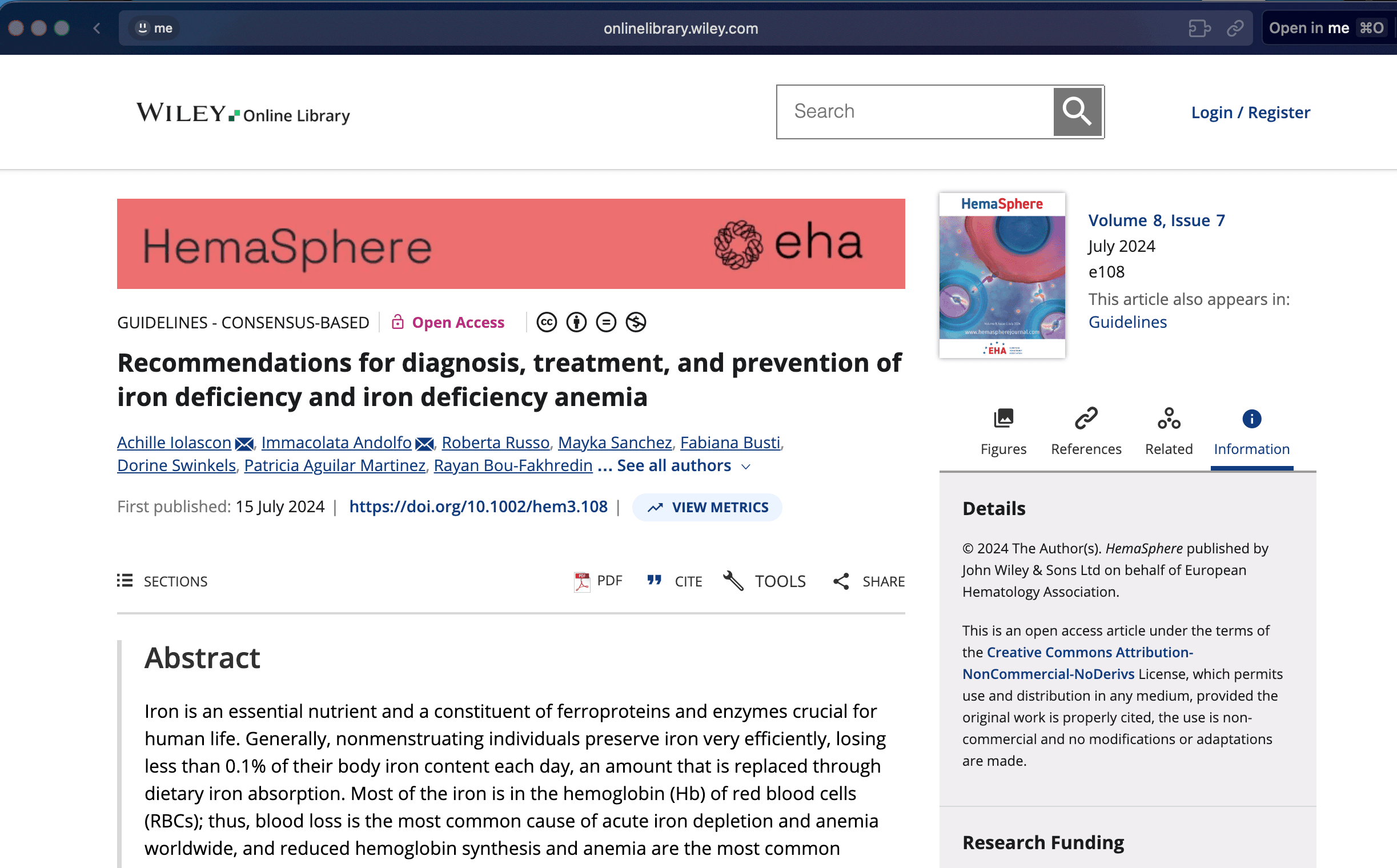
Clinicians are right to distrust AI output they cannot trace. A confident paragraph about a patient's iron status is only useful if the reader can see what it rests on — and correct it when it rests on the wrong thing.
Glass box, not black box
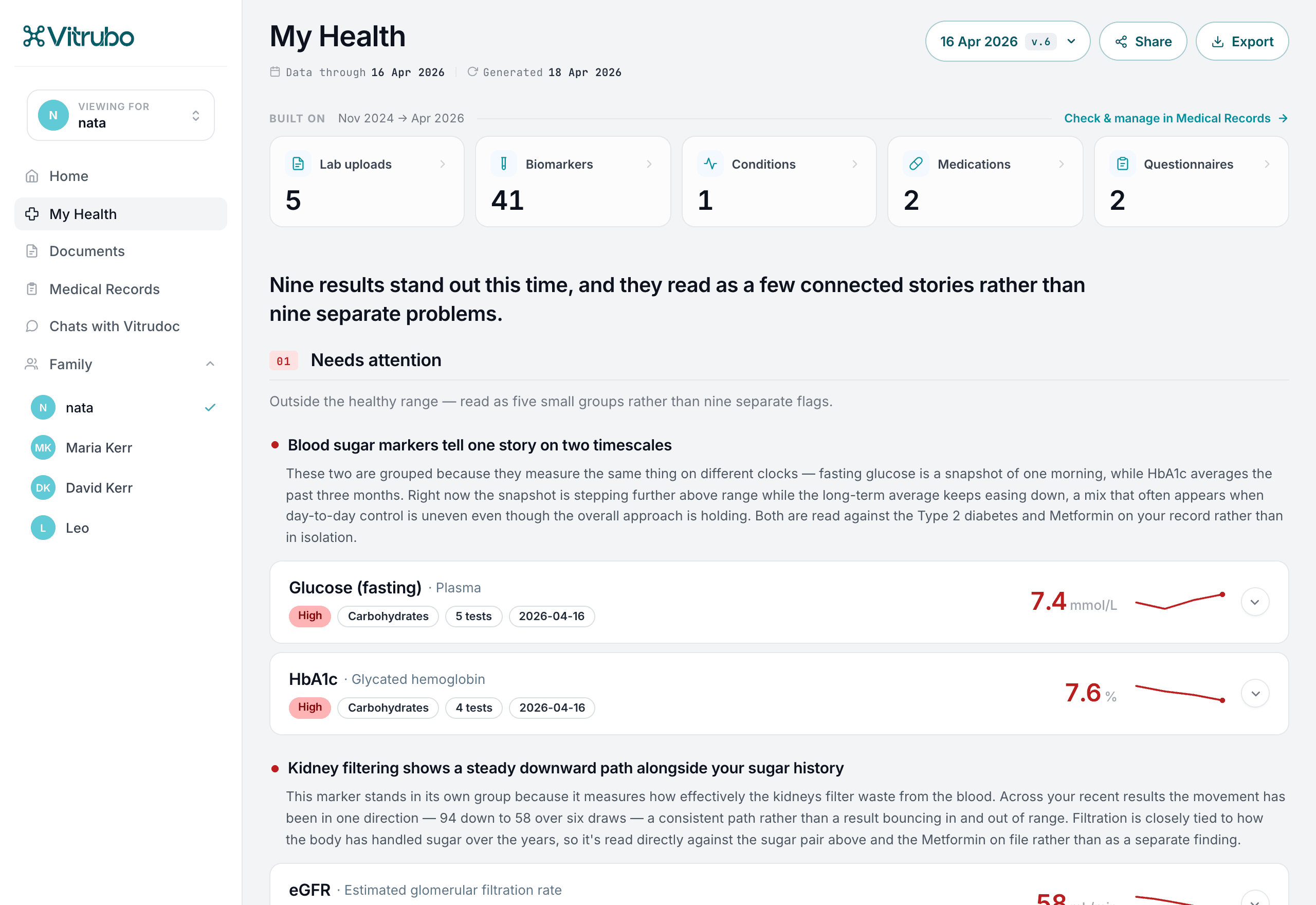
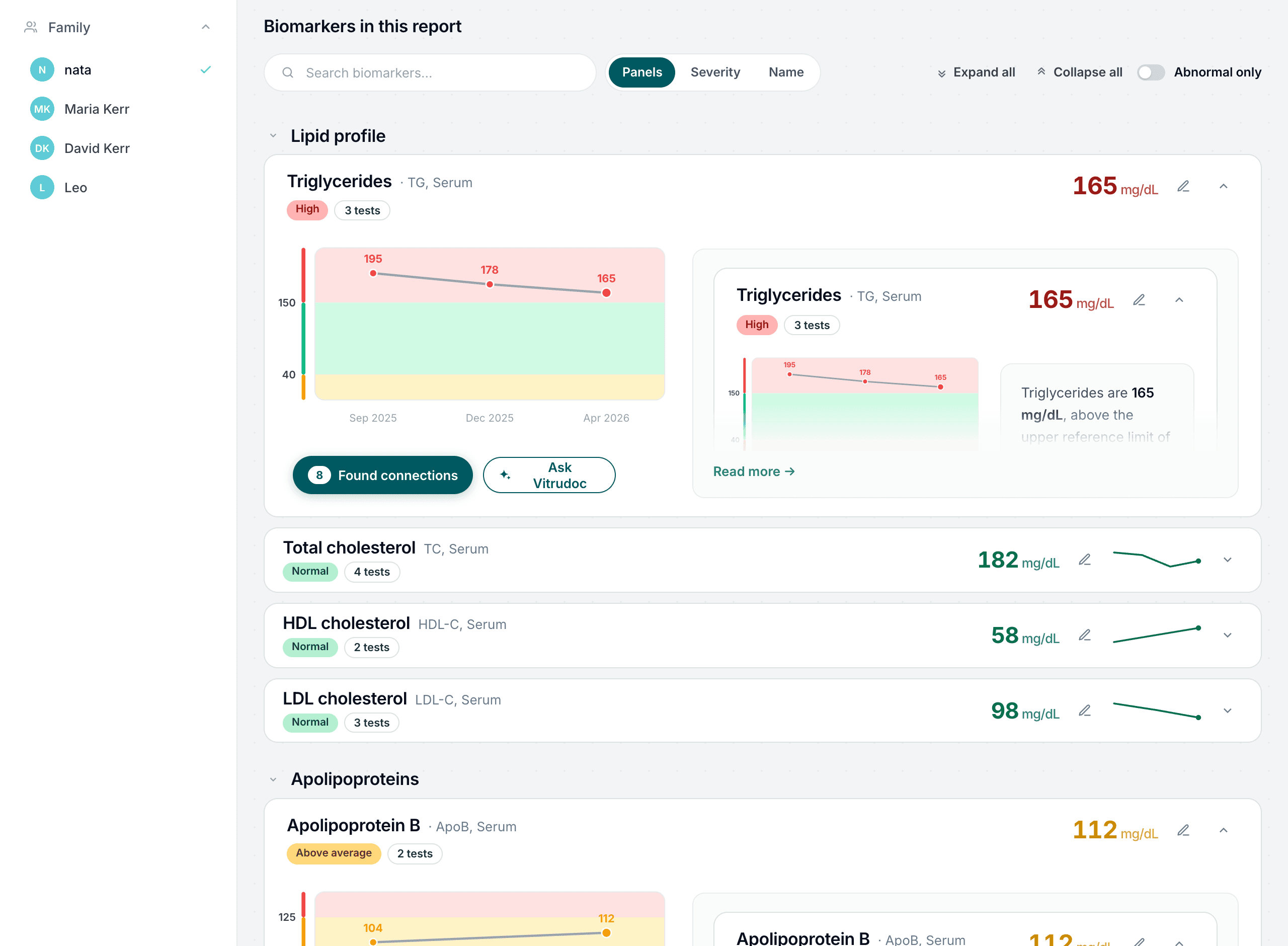
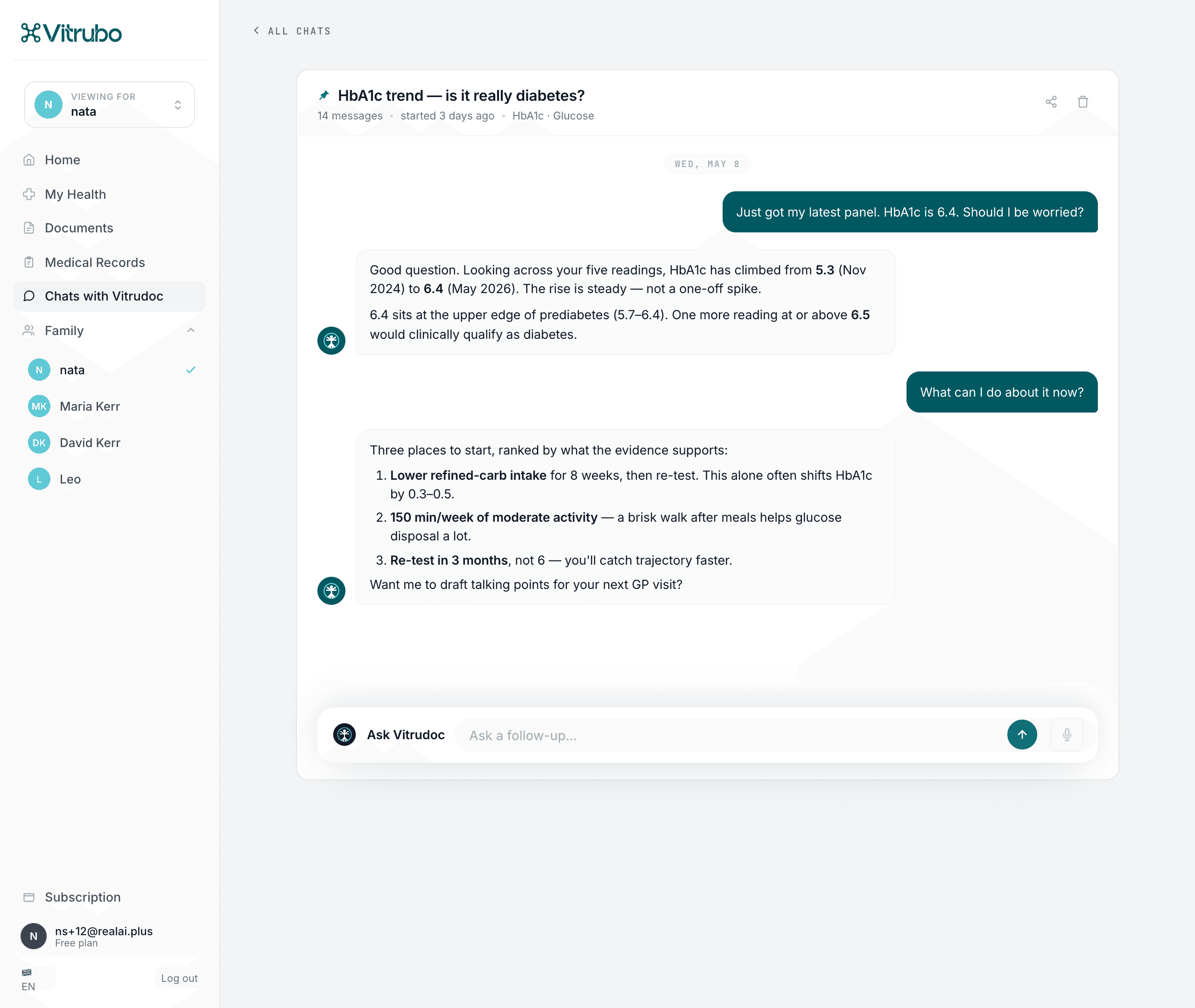
Vitrubo treats transparency as a property of the architecture rather than a promise in the copy. Every interpretation can be inspected: what was stated, which data it was stated from, and the clinical guideline it rests on. The sources are the ones clinicians already use — EHA, WHO, NICE, KDIGO, BSH, and FDA guidance where it applies.
What a citation is for
- It lets a clinician verify a statement in the source they already trust, instead of re-deriving it.
- It makes disagreement productive: “that threshold is from an older edition” is a fixable bug; “it just said so” is not.
- It keeps the product honest. A statement with no guideline behind it is visible as such.
What a citation is not
A citation does not make an interpretation a diagnosis. Guidelines describe populations and thresholds; the clinician applies them to a person. The point of the citation is to make that last step faster and safer, not to skip it.
The full picture — sources, review, audits — is on the Trust page.
This article is general information, not medical advice. Talk to a clinician about your own results.