

A glass box, not a black box.
The model writes explanations. It computes nothing. Every statement carries the guidance it rests on, so the clinician can independently review the basis for it rather than rely on the software.
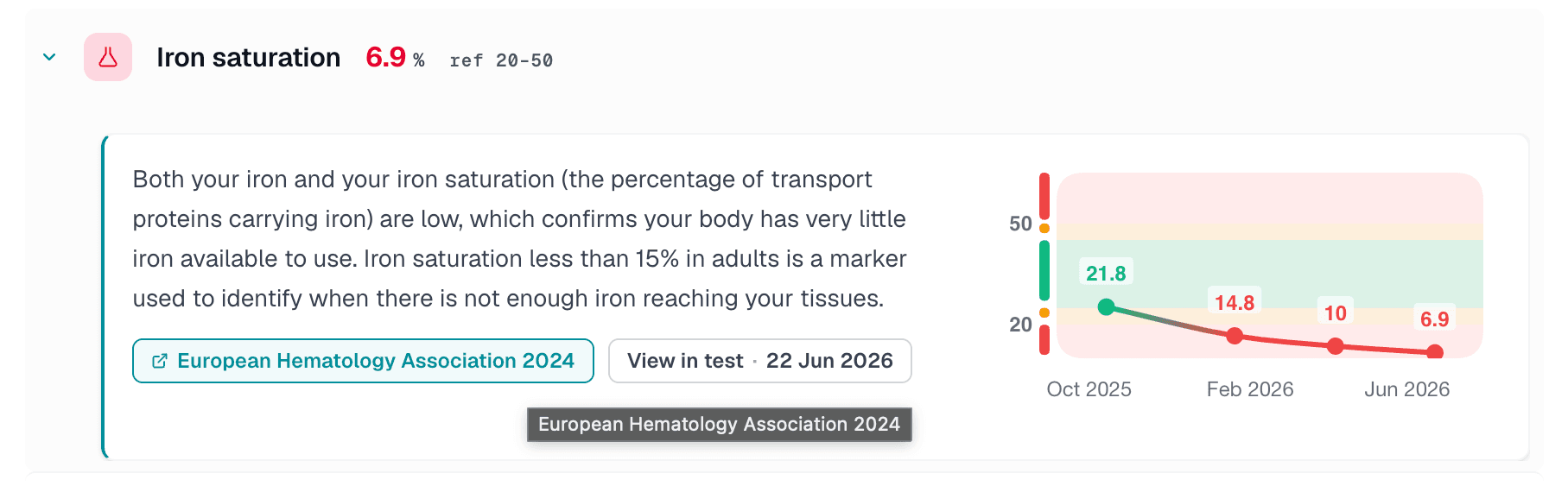
Built from medical guidance.
Built from medical guidance
Every connection and explanation is traceable to a named medical guidance: for example EHA, WHO, NICE, KDIGO, BSH.
Cited, claim by claim
Each statement links the guidance it rests on. What was claimed, and on what basis, is inspectable.
One click to the publication
Source chips open the actual guideline. The same page a clinician would read.
The model writes explanations. It computes nothing.
Grounded in medical guidance
Connections and explanations are built from named guidances, not from model memory.
Verification runs in deterministic code
Parsing, units, ranges and abnormality flags are computed by code. No number is ever written by the model.
Models check each other
Several AI models review the same case. Disagreements resolved, omissions caught, completeness enforced.
Identity never enters the prompt
Personal identity is architecturally separated from clinical data. Models see values, never personal data (PII / PHI).
Built to glass box requirements. Every statement carries the guidance it rests on, so the clinician can independently review the basis for it rather than rely on the software. In the United States that architecture is what allows software to inform clinical judgment without being regulated as a medical device. US counsel review of the current version is under way.
It knows which tests are worth adding. And which are worth retesting.
When the reasoning reaches for a marker and finds nothing, it says so out loud. Every suggestion travels with the reason attached, built from the same grounded medical logic.
Shown in full on For doctorsSee the glass box on a real case.
Three live demo cases with patient and doctor views; every claim opens its source.