
When a normal result stops being current
A result is a statement about the day the sample was taken. Past a certain age it stops describing the person, and a report that treats it as current will reassure for the wrong reason.
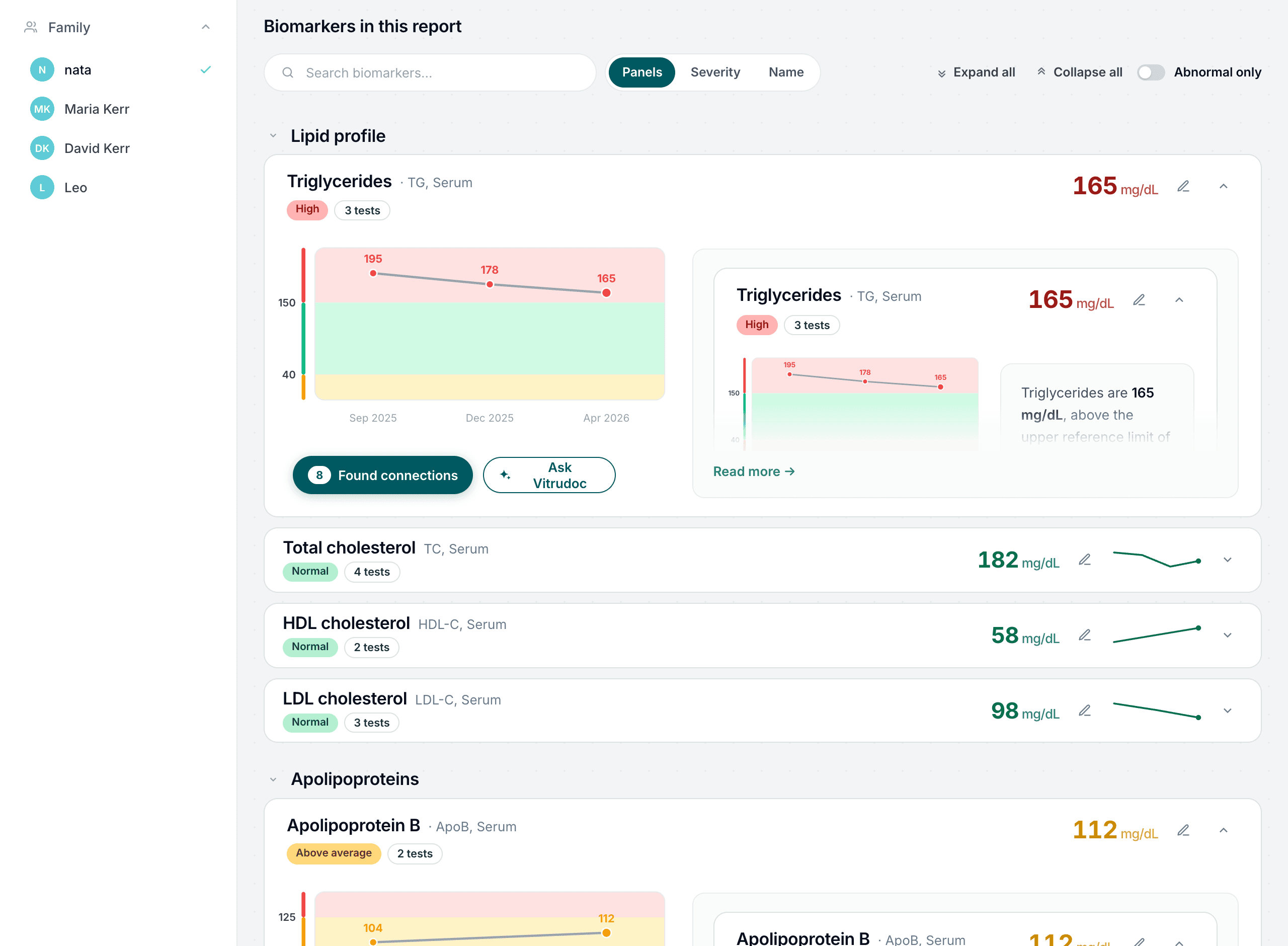
Records accumulate unevenly. A full panel once a year, a few markers after a visit, a single test before a procedure. Put them together and the latest value of each marker comes from a different month — some from last week, some from well over a year ago. Read naively, the record looks complete. It is a collage of different dates.
Every result has an as-of date
The number on a lab report is true for the moment of the draw. How long it stays a fair description of the person depends on the marker and on what happened since. HbA1c reflects average glucose over roughly the previous two to three months, so a value from last spring says little about control today. A lipid panel drawn before a statin was started describes someone who was not yet taking one.
So the useful question about a result is not only “is it normal?” but “is it still current?”
What makes a result stale
- Time alone, measured against how quickly that marker can change.
- A new medication, a dose change or a stopped treatment after the draw.
- A new diagnosis, a hospital stay or a procedure since.
- A change in the markers it is usually read alongside.
Why this matters for reassurance
A stale abnormal result tends to get noticed — someone asks for a repeat. A stale normal result tends not to. It sits in the record looking reassuring, and a summary that lists it next to this month's values quietly promotes an old fact to a current one. The risk is not a wrong number; it is a right number from the wrong time.
How Vitrubo handles it
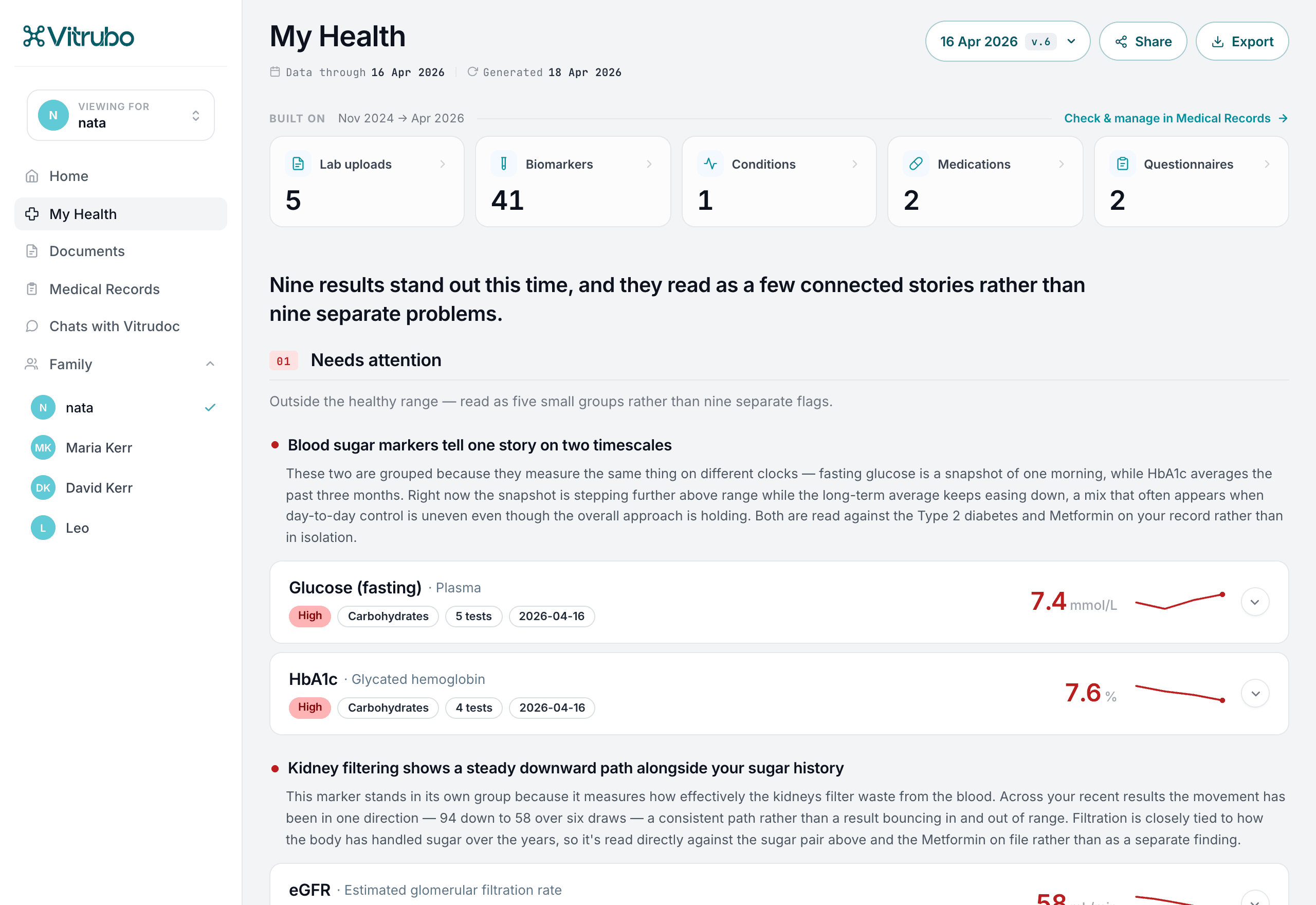
Vitrubo keeps the date on every value it reads and says so when a result is old enough that it no longer describes the person: the marker is shown with its date, it is not used as evidence that something is currently fine, and a repeat test is suggested where it would change the picture. Two of the three demo cases include markers last measured more than six to twelve months earlier, precisely to show this.
This article is general information, not medical advice. Talk to a clinician about your own results.