
A lab result means little on its own
A value, a unit and a reference range look like an answer. They are a third of one. What a result means depends on the person it belongs to and on the results around it.
Open any lab report and every line has the same shape: a name, a number, a unit, a range, perhaps a flag. The shape suggests that each line can be read by itself. It cannot. The same number can be reassuring for one person and a reason to call a doctor for another, and a line with no flag can be the most important one on the page.
What a reference range actually is
A reference range is usually the interval that covers the middle 95% of results in a group of people the lab considers healthy. Two things follow from that. First, roughly one healthy person in twenty will fall outside it on any single test, so a flag is a prompt to look, not a verdict. Second, a result inside the range is not proof that all is well: it only says the value is common among the people the range was built from.
Ranges also differ between laboratories, analysers and methods, and many of them depend on age, sex or pregnancy. Two reports of the same test from two labs can disagree on what counts as normal while agreeing on the number.
The context that changes the reading
The facts that most often change what a result means are not on the lab report at all:
- Diagnoses already made, and how long ago.
- Medications, supplements and recent changes to either.
- Symptoms, and when they started relative to the test.
- Earlier results for the same marker, from any lab.
- Other markers on the same panel that point the same way — or the opposite way.
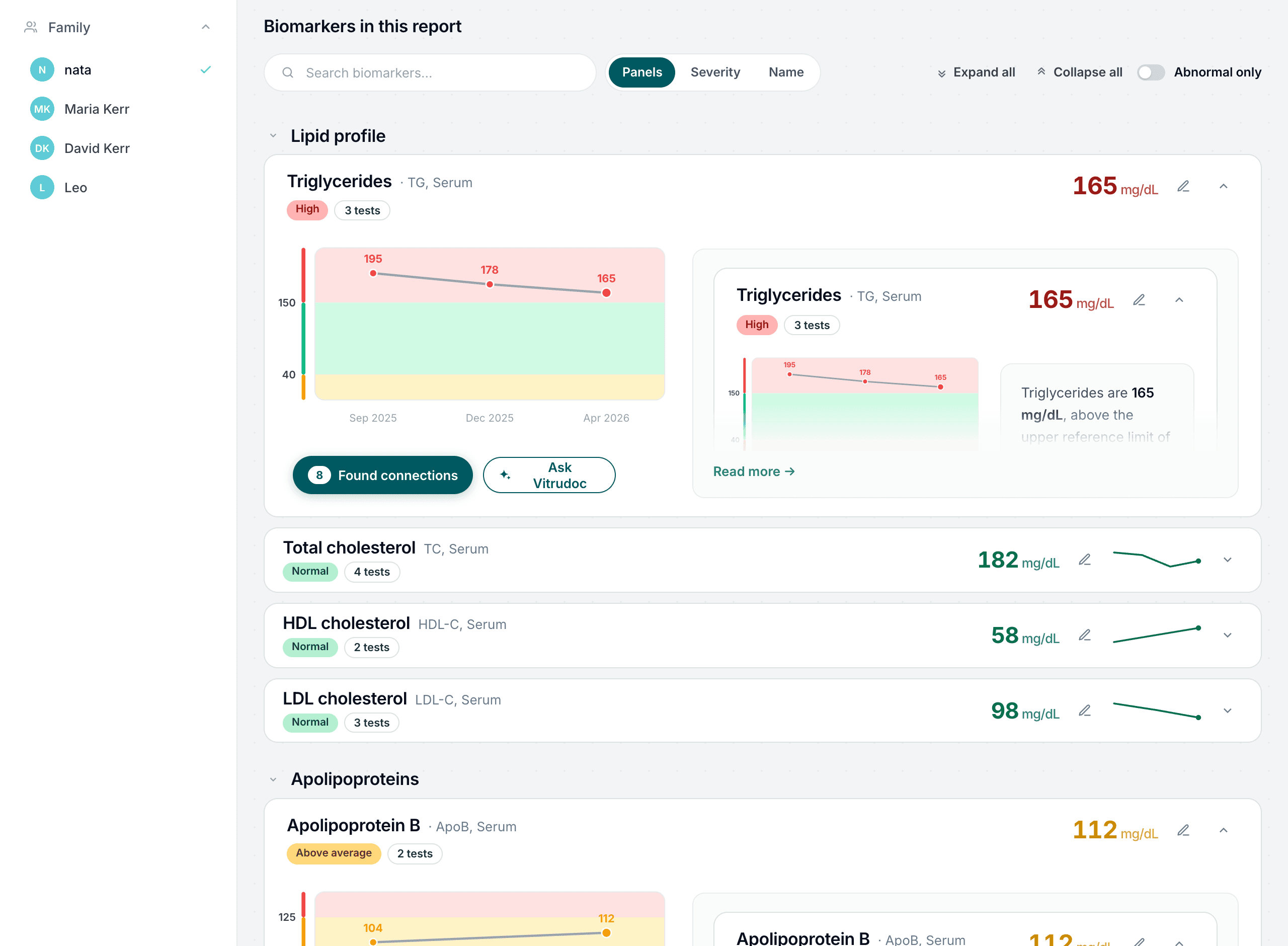
A ferritin at the low end of normal reads differently next to falling haemoglobin and heavy periods than it does in isolation. A creatinine that is still inside the range reads differently when the last three were each a little lower.
Why the trend usually matters more than the value
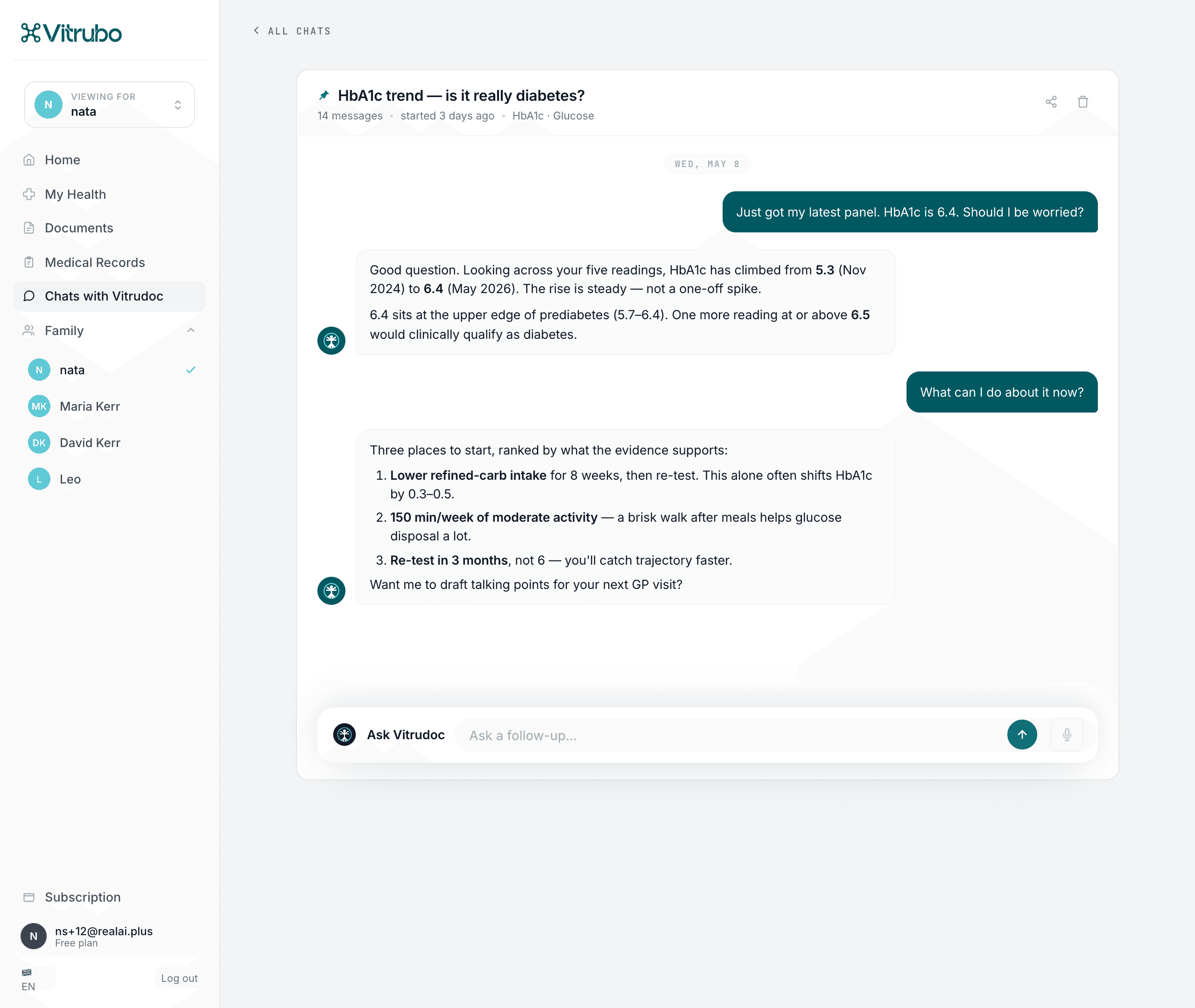
A single measurement is a snapshot. A series is a direction. For most chronic questions — kidney function, glucose control, lipids, anaemia — the useful question is not whether today's value is in range but where it was, where it is going, and how fast. That needs every earlier result, from every lab, lined up on one timeline with units that agree.
How Vitrubo reads a result
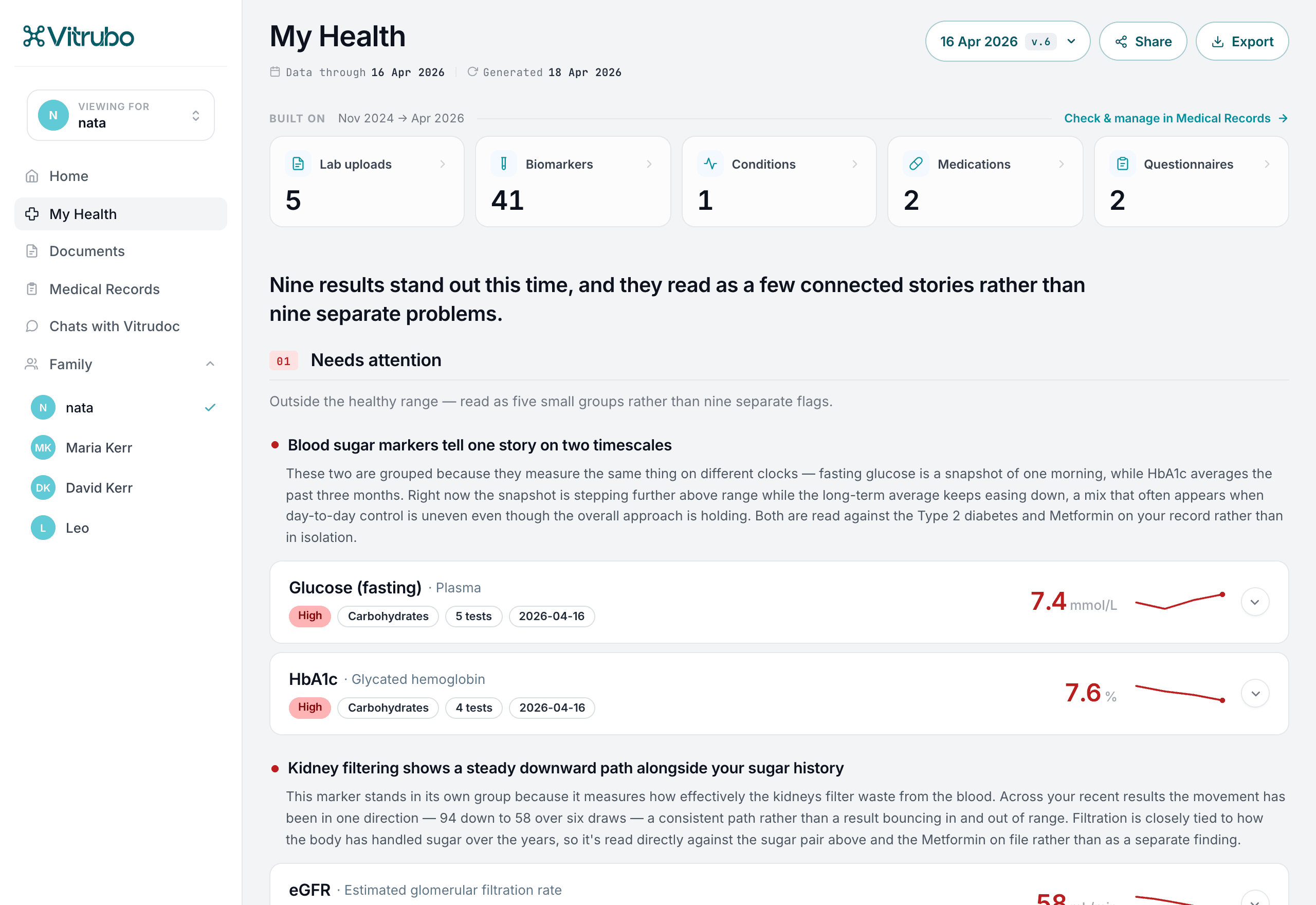
This is the reason Vitrubo starts from the whole record rather than one report. Every document a person uploads — lab PDFs, discharge summaries, prescriptions — goes into one timeline, and each result is interpreted against that timeline: earlier values, diagnoses, medications and the other markers around it. The Health Report is what that reading looks like, and the demo cases show it on three full synthetic records.
This article is general information, not medical advice. Talk to a clinician about your own results.